
The Serbian society in the second half of the nineteenth century, despite numerous constants, is characterized by a number of discontinuities and revolutionary events that have brought the confusion in the social processes. And, usually, after the entire revolutionary and war events, and they were really frequent, a number of wrecked population, most often children and distressed, was left to roam from pillar to post seeking assistance for mere survival. Since the social function of the state was usually inadequate or insufficiently developed, socially aware and responsible individuals and their societies were attempting to some extent to alleviate the pain and suffering of the victims by their humane and charitable work.
From the Serbian-Turkish war in 1875, guided by the motto „We are all brothers“, which was said by Henri Dunant, later founder of the ICRC, in the time of inability and war carnage, philanthropic, socially humane, proud and professionally proven Serbian champions of their time, following immanent solidarity in the social and cultural tradition of the Serbian society have constantly offered their assistance to all of those who were the most endangered or on the margins of society.
Therefore there is no coincidence that the founder of the Serbian Red Cross Society was a physician Vladan Djordjević, sprang from the circle of socially responsible citizens, guided by Dunant’s motto that all men are brothers. The constellation of these, philanthropic and sincerely humane people who did not stay either silent or heedless to the unfortunate destinies of the distressed consisted of Dr Svetomir Nikolajevic, a professor of the Superior School, Kornel Draškoci, a pharmacist, Đorđe Milovanović, a painter, Mihajlo Valtrović, a professor of the Superior School and the director of the National Museum, Emiljan Josimović, the first Belgrade Town Planner, Mića Ljubibratić, one of the leaders of the uprisings in Herzegovina, Dr Laza Paču, a doctor and later a longtime Finance Minister and Sreten Stojković, a dignitary of the Ministry of Education and the national worker.
In addition to the Red Cross and its activities, all of them, and many others, had been tireless in helping the endangered, by establishing charitable societies and private initiatives, such as the funds, „Think of the fatherland“, „For the widows and orphans“, the Disability Fund „St. George“ and the society „King of Decani“, which was taking care about blind children and their training for life. In all these societies, we must always mention Đorđe Vajfert (George Weifert), an industrialist, a bank governor and a humanist, who has always been guided by the motto „Brother dear, whatever religion you are“.
It is difficult to number his charitable and philanthropic activities and the activities of the other like-minded people, but one of the most impressive signs of his unselfishness and solidarity was the fact that he had given „supplies of well baked bread to 43,330 poor little children and 18,400 old and disabled people for over than four months“ during the Balkan Wars.
Between the two World Wars, Djordje Vajfert (George Weifert), a hotelier Dušan Milicević, an industrialist Vasa U. Jovanović, university professors brothers Bogdan and Pavle Popović, Kosta Stojanović, Ljubomir Stojanović, Vladimir Ćorović, the presidents of the Belgrade municipality Kosta Kumanudi and Milos Savčić, Jovan Dučić, and many others, continued to help, through numerous Charity Organizations, led by the genuine human solidarity, which did not allow them to forget all those who had been forgotten, although they needed help.
The Humanitarian Organization „Nezaboravak“ was founded to stop one of the numerous discontinuities, to think about all those who desperately need help, not only from the state, and by helping these people, this will show that the personal and humane solidarity is the constant of our civilized age, and the people who do not think only about themselves and their interests represent socially responsible individuals who do this from the deepest philanthropic impulses, with the wish to rise this emotion in all of those who have similar feelings as to be more organized and devoted to giving, not taking.
The Humanitarian Organization „Nezaboravak“ does not forget its predecessors’ kind and charitable deeds, which represent the base for its activities; it brings together people of good will, people with strongly expressed principles of unselfishness and humanitarianism. As a organization in the transformation with numerous social traumas, like the Serbian society today, „Nezaboravak“ starts organized work, despite a number of other NGOs, in full belief that the government, with its institutions will recognize the importance of such activities and by their legislations make Serbia socially more stable and organized community. The solidarity with the people of all sorts and natures is the imperative of the Humanitarian Organization „Nezaboravak“. The most important is that each of us does something every day that will put the smile on children’s faces, children who need help the most.
History
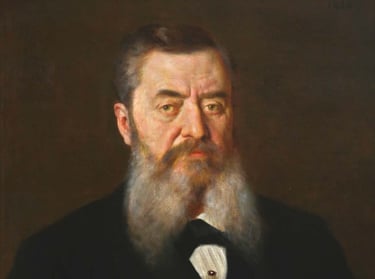
Dr. Vladan Đorđević
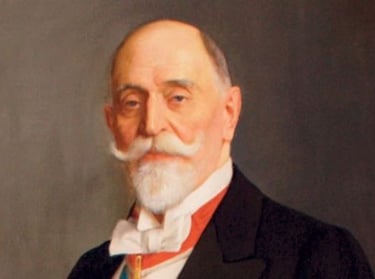
George Weifert
Society for the upbringing and education of deaf-mute and blind children „King Dečanski"